On Tuesday, July 8th, at 9 pm we are doing our sixth nephrology journal club and it is on
Johnson et al's Perspective in July's Nature Reviews Nephrology.
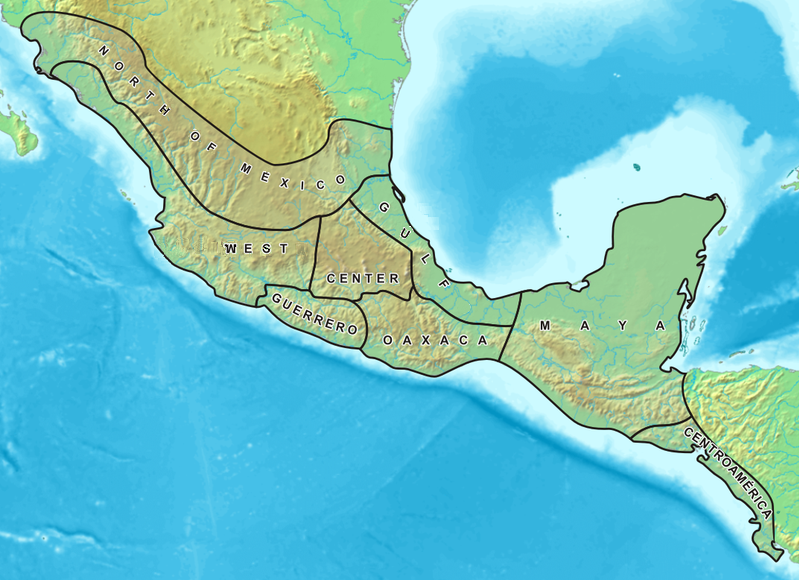
The article begins with a discussion with the ongoing epidemic of CKD in Sri Lanka and Central America. Actually people in the know are calling it Mesoamerica, a term I had not heard before.
From
Wikipedia
Mesoamerica is a region and cultural area in the Americas, extending approximately from central Mexico to Belize, Guatemala, El Salvador, Honduras, Nicaragua, and northern Costa Rica, within which a number of pre-Columbian societies flourished before the Spanish colonization of the Americas in the 15th and 16th centuries.[1][2] It is one of six areas in the world where ancient civilization arose independently, and the second in the Americas after Norte Chico (Caral-Supe) in present-day northern coastal Peru.
Characteristics of the CKD epidemic:
- Men are predominant affected
- Victims work and line in hot tropical agricultural communities
- They are manual workers
- Largely asymptomatic
- Elevated creatinine without (significant) proteinuria
The second paragraph is critical to the rest of the review. It states that numerous of studies and researchers have looked for nephrotoxins like pesticides or heavy metals none have been found. This chart is from Dan Weiner's free and excellent
CJASN review.
The Johnson editorial focuses on recurrent dehydration as the etiology. This explains the male:female mismatch and explains why high altitude appears to be protective. The article suggests that it is the hyperosmolality not the volume depletion that may be important in the disease:
In this Perspectives article, we present the hypothesis that changes in osmolarity induced by an imbalance in water and salt intake, rather than the amount of salt or water ingested per se, drives the development of dehydration-related hypertension and kidney disease.
This theory is in contrast to the more conventional view of repeated episodes of volume depletion causing pre-renal AKI and this resulting in CKD as described by Weiner et al:
Recently, a new paradigm has been gaining favor that AKI, even with apparent recovery in kidney function, may not be innocuous (27). In this paradigm, either repair attempts themselves or ongoing insults with subsequent repair at- tempts lead to a self-perpetuating cycle of inflammation and repair, resulting in kidney fibrosis and clinically recognizable CKD. Accordingly, we hypothesize that repeated ischemic insults to the kidney caused by severe volume depletion with or without hyperthermia and potentially in conjunction with other kidney insults result in progressive kidney fibrosis and ultimately, kidney failure.
The article then describes the body's defense against hyperosmolality, the first path is the familiar release of ADH and the concentration of urine and reclamation of water from the collecting tubules. The second limb is one I was not familiar with.
The second process involves activation of the polyol metabolic pathway, in which hyperosmolarity increases the activity of aldose reductase, which in turn converts glucose into sorbitol. Sorbitol is an osmolyte that protects tubular cells and interstitial medullary cells from the hyperosmotic environments that drive water reabsorption, especially under conditions of dehydration and plasma hyperosmolarity.
The rest of the article describes the science behind how these two pathways, when chronically activated, can promote CKD.
ADH antagonists have been
shown to prevent/decrease albuminuria in rat models of diabetic nephropathy. In
another experiment, forced water drinking reduced a number of measures of diabetic kidney disease in rat models (e.g. proteinuria, nephrosclerosis, renin activity, etc). The article describes some potential mechanisms for this toxicity including the possibility that ADH drives hypertension, increased metabolic demand and mitochondrial dysfunction. The authors provide links to two reviews of ADH as a progression factor in CKD:
- Nature Reviews Nephrology: Vasopressin: a novel target for the prevention and retardation of kidney disease?
- Current Opinion in Nephrology and Hypertension: Vasopressin beyond water: implications for renal diseases
The article then turns to the aldose reductase pathway. Aldose reductase generates sorbitol which is used to protect the tubular and medullary cells from hyperosmolarity. The proposed toxicity comes from the metabolism of sorbitol to fructose and then the metabolism of fructose. Fructose kinase rapidly consumes ATP in the conversion of fructose to glyceraldehyde 3-P and the consumption of ATP can cause ATP depletion and ischemic damage.
 |
| A depiction of fructose metabolism alongside glycolysis. The first step of fructose metabolism is wholly unregulated so ATP will be consumed until either there is no ATP or fructose available. |
The article points out that KHK-C, enzyme that burns ATP in the metabolism of fructose, is primarily located in the liver (hence all the liver disease associated with high sugar intake) but is also found in the proximal tubule. High fructose intake has been associated with renal disease
in animal models.
So the purported chain of events is:
- increased osmolality leads to
- increased aldolase activity which leads to
- increased sorbitol
- Sorbitol is metabolized to fructose
- Fructose metabolism causes local ATP depletion and renal damage
This chain of events was demonstrated to occur in animal models in a
recent KI article. The increased osmolality was created by heat exposure, further modeling the presumed injury in Mesoamerica. Renal dysfunction, from the increase in osmolality, was demonstrated via increases in creatinine, NGAL, blood pressure and histologic change. The experiment also used fructose kinase knock out mice and they were protected from these changes, implicating this enzyme as the bad actor.
Johnson et al, logically extends this data to one possible implication:
The observation that dehydration-induced hyperosmolarity results in renal injury mediated by endogenous fructose (which is produced by the polyol pathway) also raises the question of whether rehydration with fructose-containing drinks, or the chewing of sugarcane (which is rich in fructose), might exacerbate renal injury.
 |
| the aminoglycoside of our time? |
The article then turns its attention to the pro-inflammatory aspects of hyperosmolality. This has been demonstrated with increased cytokine release form peripheral blood monocytes and increased TGF-beta from smooth muscle cells. Increased osmolality stimulates the sympathetic nervous system which in turn stimulates angiotensin 2. All of these could be important mechanisms in causing or extending CKD with increased osmolality.
The authors conclude by briefly reviewing some of the data on salt intake and hypertension. They suggest that some of the variable results may have been because we have been looking at salt intake and ignoring the possibility that the mechanism of hypertension may not be entirely due to increased extracellular volume and that increases in osmolality may be important. Would it be possible to replace the puritanical instruction to minimize sodium with a simpler instruction to wash that sodium down with a lot of water? Exploring this will require careful attention to be paid to the timing of water administration:
Specifically, plasma osmolarity will be affected by both the amount of salt ingested and the timing of ingestion. For example, drinking water followed by eating salty food might have worse consequences than the reverse. Eating salty foods and then drinking fluids to quench the resulting thirst might not be ideal, as the thirst response occurs after vasopressin is released.[ 82 , 83 ]
This is a fascinating and novel look at emerging models of renal failure and shows the how a remote epidemic can stimulate fresh looks at old problems.